
 login
login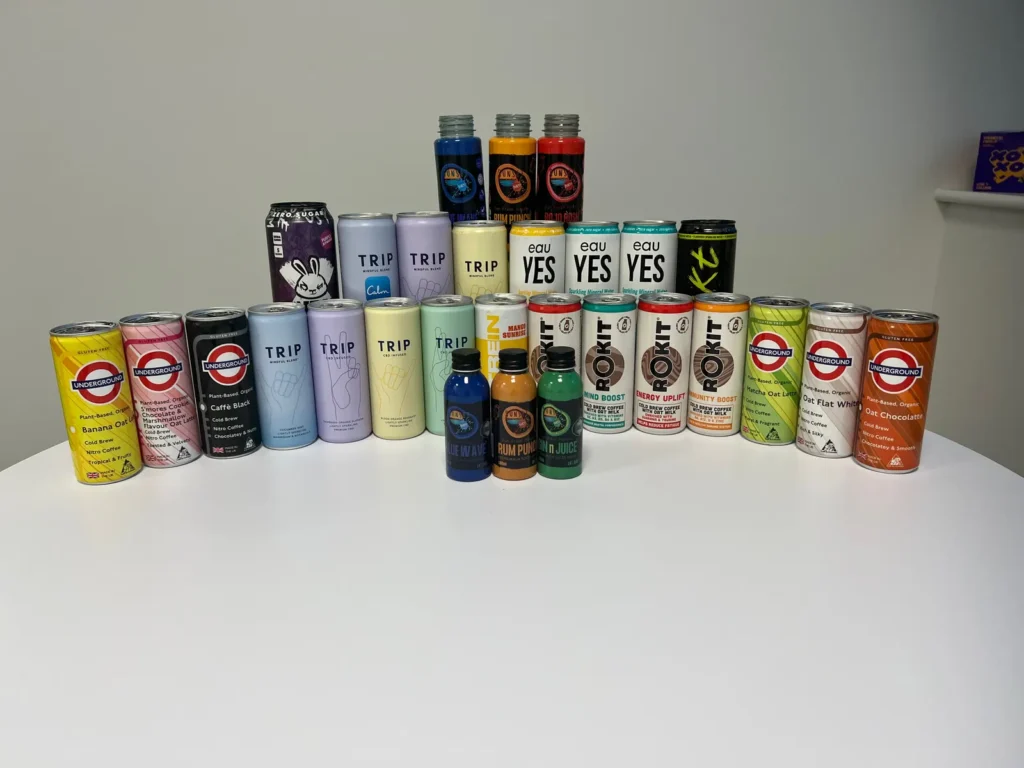
The UK’s functional drinks market has shifted from niche to mainstream in a remarkably short time. With projected growth set to reach £5.3 billion by 2027, consumer expectations are accelerating just as fast. Today’s buyers – especially Gen Z and Millennials – demand more than just refreshment from their beverages. They’re looking for added benefits: focus, immunity, gut health, or clean energy to name but a few! And brands are racing to meet these expectations, but bringing a new product to market quickly, effectively, and at scale remains a logistical challenge.
Hip Pop in the Shops!
Nowhere was that more evident than in a recent promotional launch with naturally refreshing soft drinks brand Hip Pop, a project that required a complex co-packing and logistics effort to be completed in just two working days, and all with the added complication of a bank holiday weekend. The task involved assembling and distributing a large volume of promotional floor-standing display units (FSDUs) to multiple Sainsbury’s distribution centres across the UK, with no margin for delay.
This kind of project success rests on the ability to plan and execute a true end-to-end operation – something that specialist third party logistics providers, such as Prism eLogistics can deliver. From early consultation on display design to final-mile distribution, every stage must be integrated. Our 30,000 sq.ft premises based in Hampshire is equipped for exactly this kind of challenge, with automated packing lines capable of handling high-volume runs and sleeving systems that can adapt to rapid changes in product formats or branding.
Precision planning and an expert team
Yet machinery alone isn’t enough. It takes planning precision and an expert team to make projects of this nature work. The Hip Pop campaign required coordinated shifts, 24-hour operations, and a transport team ready to move as soon as the final pallet was wrapped. Working over a bank holiday introduced further variables, from reduced haulage availability and tighter retail timelines through to less flexibility on collection windows. Success required clear communication across the supply chain, from suppliers and brand managers through to warehouse teams and retail partners.
Lesson to learn
The Hip Pop example illustrates a number of wider lessons for logistics professionals. Firstly, co-packing and logistics need to be part of the brand strategy from the start and not treated as a final step. When supply chain teams are included early, they can spot opportunities to optimise packaging, streamline fulfilment, and avoid bottlenecks before they happen.
Secondly, it highlights that peak periods in retail are no longer confined to the final quarter of a year. Brands are launching year-round promotions and increasingly aligning campaigns to cultural moments, social media buzz, or wellness trends. That means readiness isn’t seasonal. Supply chains must now be equipped to deliver exceptional speed and flexibility at any time of year, including over long weekends when many other parts of the system slow down.
Finally, it reinforces the need for partnerships, not just providers. For a promotional launch like Hip Pop’s, the logistics team wasn’t simply executing a brief, they were adapting in real time, managing uncertainty, and solving problems as they happened on the ground. It’s this collaborative approach that transforms a supplier into a genuine growth partner.
Beyond the growth of functional drinks
More broadly, what’s happening in functional drinks is a microcosm of the broader trends in fast-moving consumer goods. Product life cycles are shortening. Innovation cycles are accelerating. And the lines between direct-to-consumer, retail, and third-party channels are increasingly blurred. In this environment, adaptability becomes a core capability and logistics is on the front line.
Prism’s work in this space, including projects for other brands like Sneak Energy, underlines how operations must combine scale with speed. For Sneak, for example, we handled over 2.2 million cans, amounting to more than 2,000 pallets and fulfilling over 32,000 orders over across 47 countries. The ability to shrink sleeve cans at high speed has enabled the brand to quickly pivot in response to ingredient updates, new flavours, or shifting retail requirements and without disrupting timelines or creating unnecessary waste. In one case, when Sneak reformulated a key product, the sleeving team used a block-out process to relabel thousands of existing cans rather than discard them. This not only reduced cost and environmental impact but also allowed the campaign to proceed without delay.
The lesson from both Hip Pop and Sneak is clear: logistics and fulfilment providers can be a strategic enabler of brand success. When operations are aligned with creative and commercial goals, they help companies move faster, launch smarter, and scale with confidence. As consumer demands continue to evolve, brands will need supply chain partners that offer not just capacity, but capability. And as the Hip Pop rollout demonstrated, even when under bank holiday pressure, a winning logistics team can turn complexity into competitive advantage.
Latest Posts
-
How To Launch a UK Drinks Brand: Spooky’s Kiosk
21 September 2026 -
Recyclable Shrink Sleeving for UK Businesses
14 September 2026 -
How to Choose a Fulfilment and Logistics Partner: A Guide for UK Businesses
3 September 2026 -
Countdown to Christmas – It’s Time to Plan for the Festive Period
22 July 2026 -
Shrink Sleeves the Solution to Can Supply Crisis, says Prism
10 July 2026